
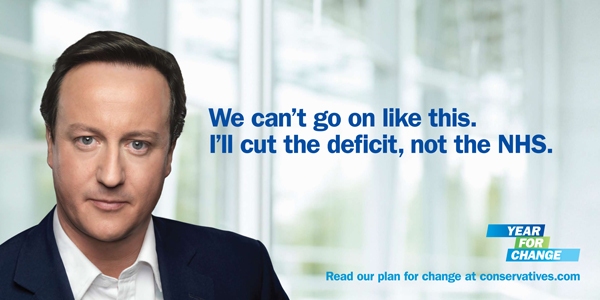
David Cameron was never going to get off unscathed after reneging on his manifesto pledge that he’d leave the NHS alone. Instead, his top-down reorganisation has reportedly cost almost £2 billion. The popular press has howled in protest and criticism of the NHS Reforms has been deafening. Not a week has gone by without a horror story being dragged out before the public and splashed across our newspapers and tv screens. Survey after survey has reported that patient care is substandard, waiting times are appalling, morale is low, and money is being frittered away from the NHS coffers as a result of poor hospital management
This year alone we’ve all read about the Stafford Hospital Scandal, and seen 11 hospital trusts placed in ‘special measures’. Add to this the hundreds of stories proffered by disgruntled members of the public, and it’s fair to say the NHS is having a bleak old time of it.
If we take the view that (historically) the British press has long since been bedfellows with the political elite, their preoccupation with damning the NHS appears to be twofold - either to justify Tory meddling, or to suggest the restructure has thrown the NHS into turmoil. Although both sides have completely different agendas, both appear to have an adverse effect on the public’s perception of the NHS.
A recent survey undertaken by First4Lawyers perfectly illustrates how public confidence in the NHS is failing. Although only a very small snapshot of public opinion, almost 80% of the 500 people polled said they were aware of the issues with several NHS Trusts heavily reported on in the media over the past several months. Almost 30% purported that they know someone who has experienced poor treatment in hospital, and only 43% could say with certainty that they felt they were listened to by doctors. Even more worrying, less than half of those surveyed felt complaints received about doctors/nurses’ poor bedside manner are due to the staff being overworked. Reading between the lines, presumably this means that the other half feels that poor patient care is a result of laziness, poor training and lack of patient empathy. Troubled times for the once heralded institution.
Despite this apparent condemnation of the NHS, interestingly only 45% people of the people surveyed said they would consider suing if they felt they had received inadequate treatment. I find this to be the most revealing statistic of all.
Okay, it could be that people aren’t likely to pursue a claim as they aren’t aware they can - traditionally, as a nation we’re far less inclined to sue for damages here in the UK as they are in the States. Alternatively, perhaps this is because the British public don’t want to kick a man when he’s down and take money from an overstretched and overburdened NHS. This would stem from the misguided belief that a successful pay-out might mean that hospital management are forced to pilfer money otherwise destined to be spent on life-saving equipment for their local A&E, obstetrics or oncology department. In reality, far from being an impoverished institution in crisis, the NHS is actually an organization of beast-like proportions. This year alone the government has put aside some £22.7billion to pay for medical negligence claims. It’s also very highly regarded overseas - just look at Obama’s preoccupation with Obama-Care.
That’s not to say the NHS is a well-oiled machine. I recently waited for 5 hours in a busy A&E department with suspected appendicitis. I also awoke from a D&C following a miscarriage in a room full of newly born babies. Somehow the word ‘mistake’ doesn’t quite cut it - I was naturally really heartbroken at the time. But I’m not dead. I’m alive and am perfectly well. And thankfully so will most of us be after a short stay in hospital.. It’s not a memory any of us will look back on fondly, but hopefully most of us will be able to say that it patched us up efficiently.
Should we be worried about the future NHS? I’d be inclined to say “never”. No government (no matter how self-serving, inexperienced, or maligned) would ever dare to do away with our beloved NHS. In real terms, David Cameron’s meddling is likened to a quick trip to the barbers for a short back and sides, and not a grade 2 all over. Apart from his plans to part-privatise (which will never get through parliament) most of his reforms have been a colossal waste of time and money, but have also uncovered areas of significant weakness within the current structure of the NHS, and some serious failings to boot. Hopefully the result will be a far more streamlined NHS that will serve us for many hundreds of years to come.
As for claiming for medical negligence, of course you should! A few years ago, my dads car was vandalised by a unemployed drunk. He was caught on CCTV, found and prosecuted, and now pays my dad just 20p a week in damages. The moral of the story is that wherever someone is at fault (regardless of their circumstances), they should have to admit liability; It’s a matter of principle. Not only that, but taking £30,000 for a bodged hip replacement doesn’t mean one less midwife for the maternity ward. You are taking from a pre-allocated fund. Plunder away in the knowledge our newly coiffed NHS will carry on. It’s something we should all feel incredibly proud of.
Featured Post

We have always had a good experience whenever we have needed them, but I have heard some conflicting stories!
Kerry @ Lived With Love | Mummy, fashion & lifestyle blog
Kerry recently posted…Recent beauty bits!